
2026-09-14 · Sarah Lindstrom
Steps to Check Your Furnace Filter and Vents Before First Snow
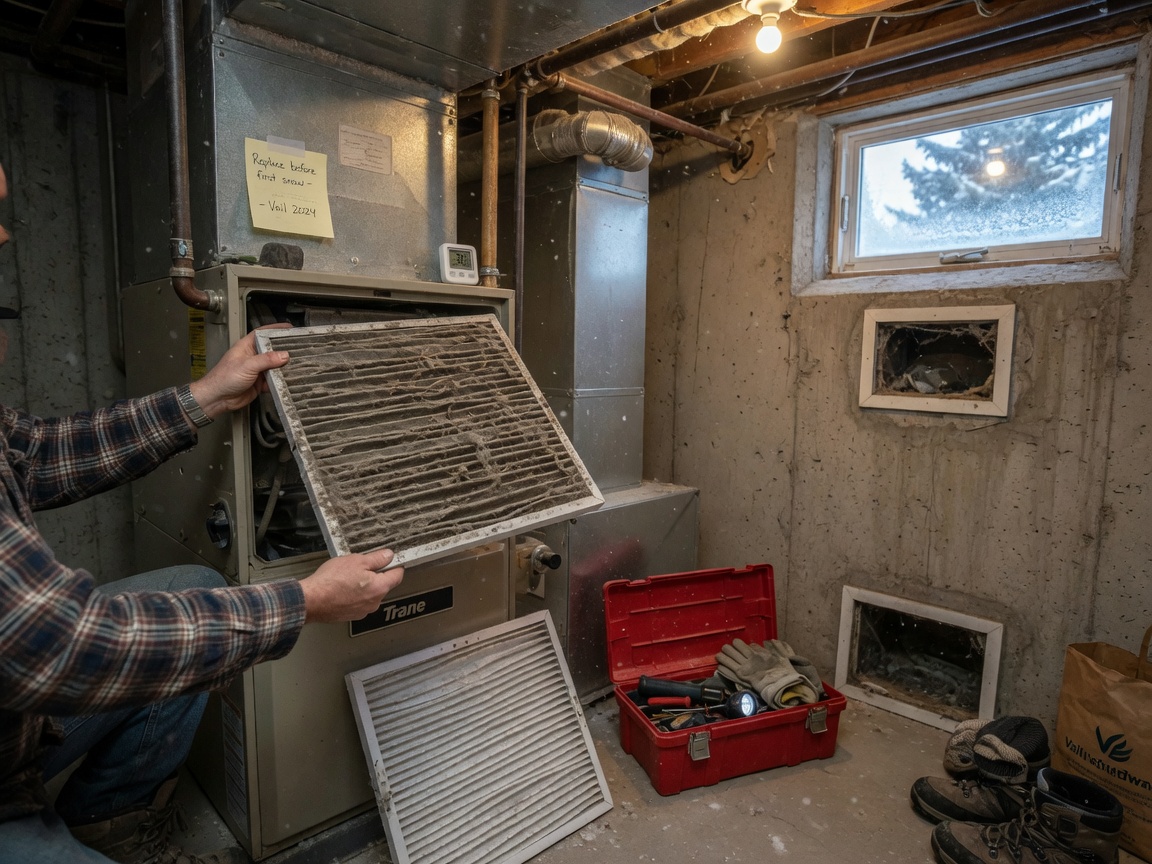
Checking the furnace filter takes 5 minutes every 30-60 days and vent inspection adds 10 minutes before the first snow reaches Vail. These steps keep airflow open so the system does not strain when temperatures drop below freezing in the surrounding neighborhoods.
Preparing for Vail Winter Conditions
Vail sits in a region where snow often arrives by mid-October and stays through April. Homes here typically feature forced-air systems that pull cold outside air through the filter before it reaches the heat exchanger. When snow loads the roof and wind packs drifts against vents, restricted airflow forces the blower to run longer cycles. This pattern shows up first in higher utility use and uneven room temperatures across Vail and nearby subdivisions. Owners who clear the filter and exterior vents early avoid the extra wear that appears once continuous sub-zero nights begin. Local terrain also channels cold air down valleys, so systems in lower-lying streets start earlier than those on ridges. A quick pre-snow inspection catches these seasonal changes before they turn into no-heat calls during the first deep freeze.
Inspecting and Replacing the Furnace Filter
Locate the filter slot near the return-air grille or inside the furnace cabinet. Turn the system off at the thermostat, then pull the filter straight out. Hold it to a light source; if you cannot see light through the mesh, replace it. Standard 1-inch filters last 30 days in Vail homes with pets or nearby construction dust, while 4-inch media filters often reach 90 days. Note the exact size printed on the frame before buying a new one at a local hardware store. Slide the fresh filter in with the airflow arrow pointing toward the furnace. Wipe the slot edges clean so no debris falls into the blower compartment. This single step restores proper static pressure and prevents the limit switch from tripping on cold mornings when the unit must run nonstop.
Checking Supply and Return Vents
Walk through each room and confirm every supply register is open at least 75 percent. Closed vents in unused spaces still create back-pressure that affects the entire duct run. Remove the register face and vacuum the first 12 inches of duct with a crevice tool to clear lint and pet hair that settled over summer. Return vents in hallways or near the furnace need the same treatment. In Vail homes with crawl spaces, check that exterior dryer or bath exhausts do not blow directly onto return-air intakes; cold moist air can freeze on the filter overnight. Walk the perimeter once more after the first light snow to verify no vent is blocked by drifted snow against the foundation. These checks keep balanced airflow so every room receives heat within 15 minutes of startup.
Additional Duct and Intake Checks
Trace the main return duct from the furnace to the largest grille. Look for disconnected joints or crushed sections where insulation has settled. In older Vail houses built before 1990, flex duct often sags and collects condensate that later freezes. Straighten or replace any section that shows more than 20 percent compression. Outside, confirm the combustion-air intake on high-efficiency units remains clear of snow and ice; a blocked intake triggers pressure-switch faults within the first week of sustained cold. If the furnace sits in a utility closet, verify the door louver is unobstructed so combustion air can reach the burners. These steps take another 15 minutes yet directly address the conditions that cause short cycling once Vail temperatures stay below 10 degrees for several nights in a row.
Knowing When to Schedule Professional Service
If the filter looks clean yet the blower still struggles, or if any vent shows black soot streaks, stop and call for Furnace Repair. Persistent issues often trace to the heat exchanger or inducer motor, both of which require specialized gauges. Homeowners who complete the filter and vent checks first give the technician clear baseline data, shortening diagnostic time. For readers who want to understand common failure patterns once snow stays on the ground, see the related post on Furnace Issues Common in Vail During Deep Winter Freeze-Ups. Keeping these pre-season tasks current reduces the chance of an emergency visit after the first heavy snowfall.